Have you ever noticed your heels lifting during a squat, your knees caving in when you land, or one ankle feeling “blocked” when you lunge forward? If so, your ankle dorsiflexion may be limited.
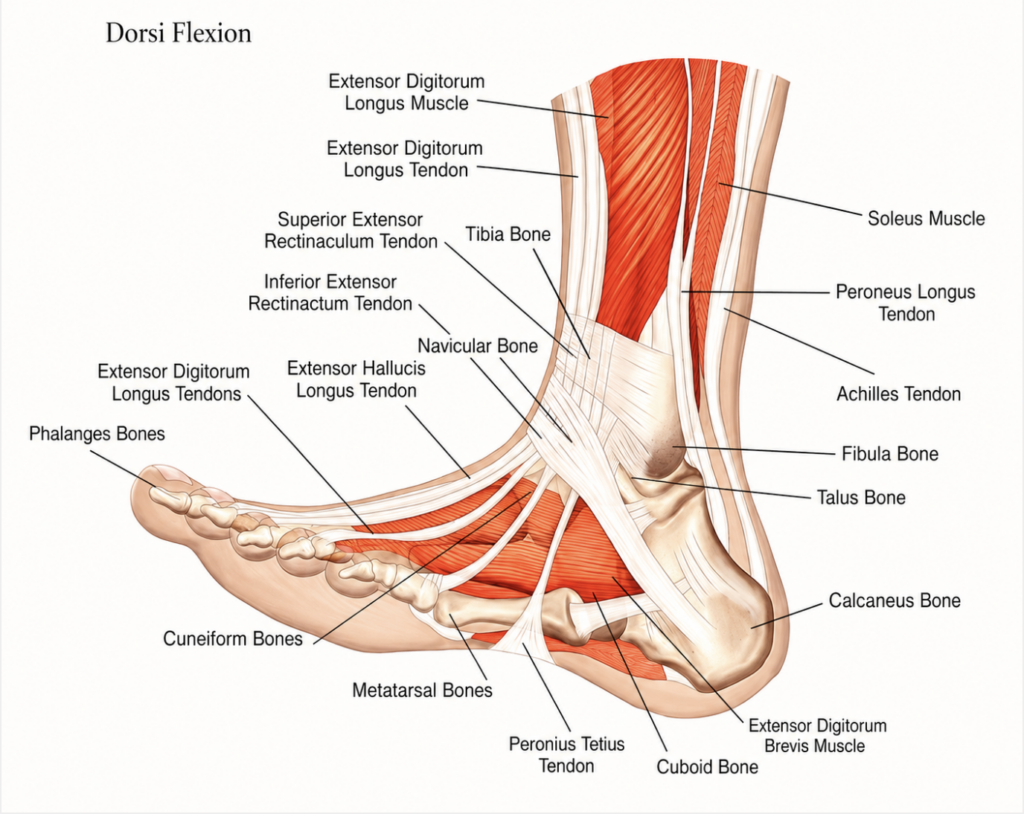
In simple terms, dorsiflexion is your ability to bring your shin forward over your foot. Although that sounds small, it plays a big role in walking, stairs, squatting, running, cutting, jumping, and landing. In fact, a 2025 research paper by Tourillon, M’Baye, and Smith explains that ankle dorsiflexion range of motion is important for rehab, injury risk reduction, and athletic performance—especially in athletes. If this is something that you struggle with Book an Appointment today.
What Is Limited Ankle Dorsiflexion?
Limited ankle dorsiflexion means your ankle does not bend forward as well as it should. As a result, your body may compensate elsewhere. For example, you might turn your foot out, lift your heel, collapse your arch, or let your knee drift inward during movements like squats, lunges, or landings.
According to the paper, restricted dorsiflexion can affect force absorption and may increase stress through the ankle, knee, and lower limb. It has also been linked with issues such as lateral ankle sprains, chronic ankle instability, Achilles tendinopathy, plantar heel pain, stress injuries, and patellar tendinopathy.
Who Is Most at Risk?
Although anyone can lose ankle mobility, it is especially common in:
- Athletes who jump, land, sprint, cut, or squat
- Runners with calf tightness, Achilles pain, or previous ankle sprains
- Gym-goers who struggle with deep squats
- Field-sport athletes who need quick direction changes
- People with a history of foot or ankle injury
Additionally, the research highlights that ankle dorsiflexion restriction is not always caused by one thing. Instead, it may come from joint stiffness, calf muscle tightness, tendon restrictions, nerve sensitivity, or even bony blocking in some cases.
What Does It Take to Get Better?
First, the key is not just “stretch your calves and hope for the best.” Instead, Tourillon and colleagues recommend an individualized approach using the weight-bearing lunge test as a starting point. This test helps measure how far your knee can travel forward over your toes while your heel stays down.
Then, your physiotherapist looks at both:
The number — how much range of motion you have
The feeling/location — where you feel tightness, pain, or blocking
For example, an anterior “pinch” at the front of the ankle may suggest a joint restriction, while a posterior calf stretch may point toward the calf muscle-tendon unit. Meanwhile, symptoms behind the ankle or into the leg may require a different assessment.
Most importantly, the paper recommends moving away from a “one-size-fits-all” plan and using targeted treatment based on what is actually limiting the ankle.
How Physiotherapy Can Help
A physiotherapist can assess your ankle, compare both sides, check your squat or running mechanics, and identify what is driving the restriction.
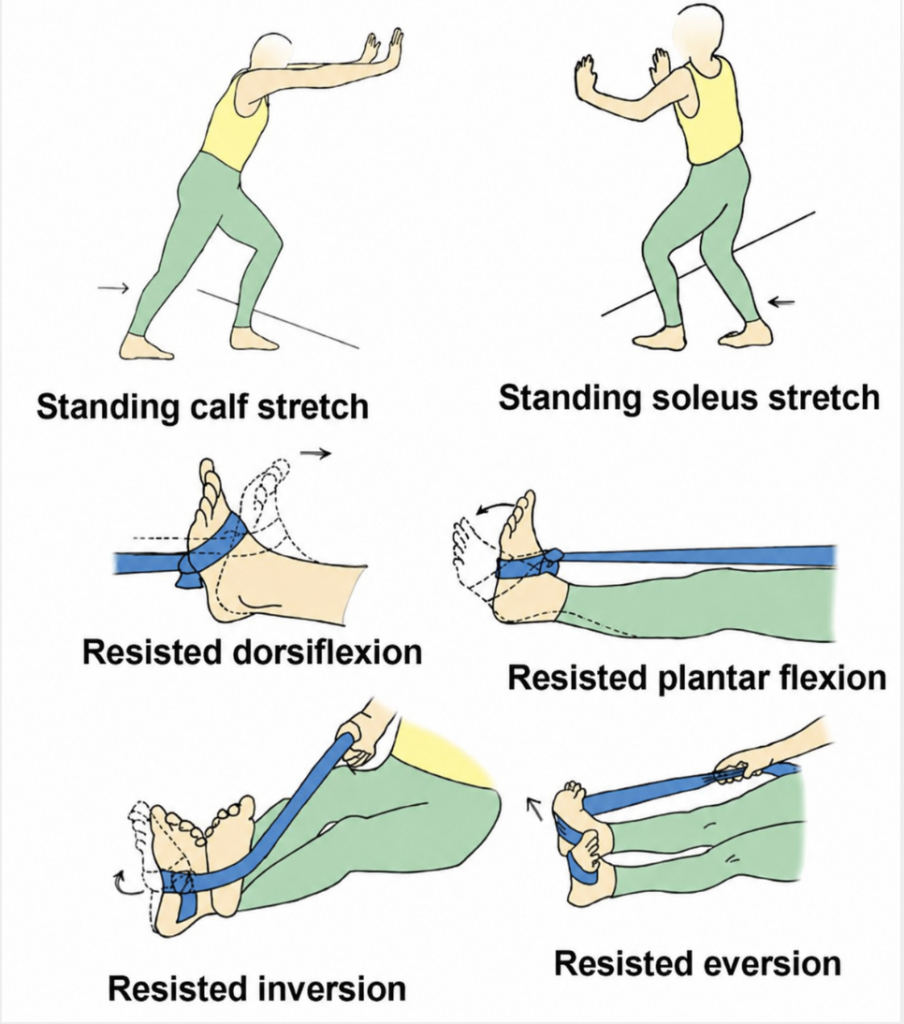
Depending on your findings, treatment may include:
- Joint mobilizations to improve ankle glide
- Calf and soleus mobility work
- Strengthening for the foot, ankle, calf, and hip
- Balance and control exercises
- Sport-specific landing, cutting, or running drills
- Gradual return-to-sport planning
Furthermore, physiotherapy can help you improve mobility and learn how to use that new range properly. After all, gaining motion is helpful—but controlling it during sport is what really matters.
People Also Ask
What are the signs of weak dorsiflexion?
Signs may include heel lift during squats, difficulty keeping the knee over the toes, foot turning outward, poor balance, ankle stiffness, front-of-ankle pinching, or trouble going downstairs. You may also notice one side feels tighter than the other. Ankle Dorsiflexion Affects Hip and Knee Biomechanics During Landing.
What injuries affect dorsiflexion?
Common injuries that can affect dorsiflexion include ankle sprains, chronic ankle instability, Achilles tendinopathy, calf strains, plantar heel pain, ankle impingement, tendon irritation, and some foot or ankle fractures. The research also notes links between limited dorsiflexion and several lower-limb overuse injuries. Limited ankle dorsiflexion increases the risk for mid-portion Achilles tendinopathy in infantry recruits.
What causes loss of dorsiflexion?
Loss of dorsiflexion can be caused by joint stiffness, calf tightness, tendon restrictions, nerve sensitivity, swelling after injury, protective guarding, poor movement habits, or bony changes. Therefore, the right treatment depends on the cause—not just the symptom. Ankle impingement syndromes.
Helpful resources
For more reading, see the ChoosePT guide, and the AHS overview. For more help, visit Physiotherapy Services and Book an Appointment.
Ready to Move Better?
If stiff ankles are affecting your training, running, squats, or sport performance, physiotherapy can help you find the real reason behind the restriction and build a plan that fits your goals.
Looking for help with ankle dorsiflexion and range of motion in Edmonton, AB? Book an Appointment today and take the first step toward moving stronger, safer, and with more confidence.
References
Tourillon, R., M’Baye, M., & Smith, M. (2025). Restoring ankle dorsiflexion range of motion in athletes: An individualized clinical decision-making system. Frontiers in Sports and Active Living, 7, 1677383. https://doi.org/10.3389/fspor.2025.1677383
Taylor, J. B., Wright, A. A., Smoliga, J. M., DePew, J. T., & Hegedus, E. J. (2022). Ankle dorsiflexion affects hip and knee biomechanics during landing. Sports Health, 14(3), 328–335. https://doi.org/10.1177/19417381211019683
Rabin, A., Portnoy, S., & Kozol, Z. (2014). Limited ankle dorsiflexion increases the risk for mid-portion Achilles tendinopathy in infantry recruits: A prospective cohort study. Journal of Foot and Ankle Research, 7, Article 48. https://doi.org/10.1186/s13047-014-0048-3
Berman, Z., Tafur, M., Ahmed, S. S., Huang, B. K., Chang, E. Y., & Chung, C. B. (2017). Ankle impingement syndromes: An imaging review. British Journal of Radiology, 90(1070), 20160735. https://doi.org/10.1259/bjr.20160735