Whether you’re lifting your baby, scrolling on your phone, gardening, or working on the computer, your thumbs do a lot more than you probably realize. However, when everyday movements suddenly become painful, De Quervain’s tenosynovitis (also known as thumb tenosynotivitis) may be the culprit.
Fortunately, the good news is that most people recover well with the right treatment. Even better, early physiotherapy can often help you avoid prolonged pain and, in many cases, more invasive treatments.
If you’re experiencing persistent thumb pain in Edmonton, AB, book your assesment now.
What Is De Quervain’s Tenosynovitis?
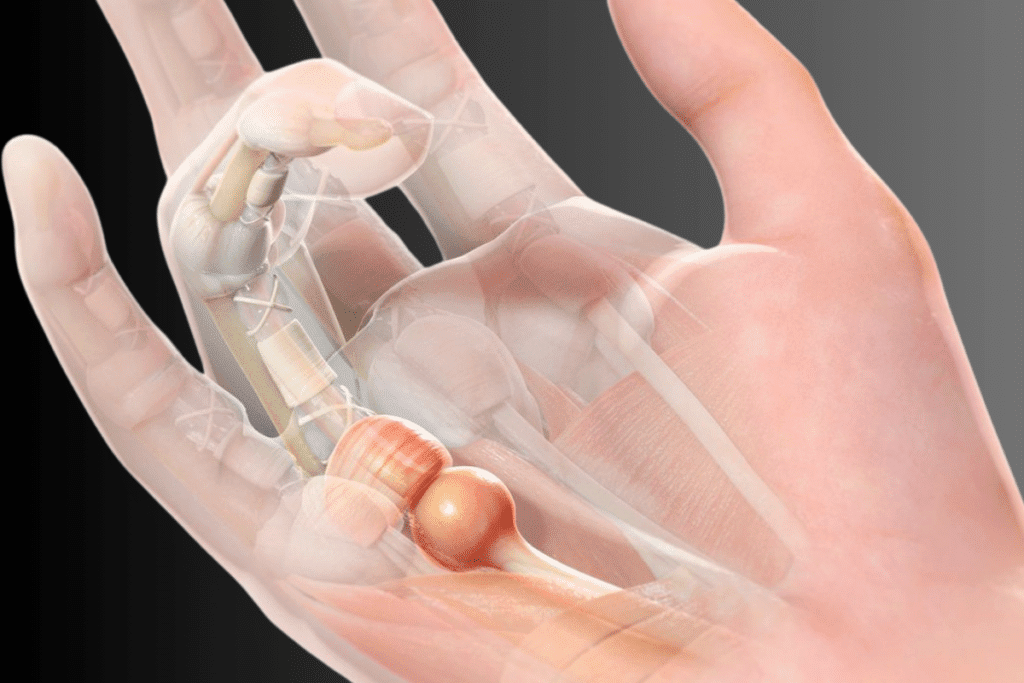
De Quervain’s tenosynovitis is an overuse condition that affects two tendons running along the thumb side of your wrist. These tendons normally glide smoothly through a small tunnel (called a tendon sheath). However, when the tendons become irritated and the surrounding tissue thickens, movement becomes painful.
Despite the name “tenosynovitis,” recent research suggests that inflammation is often not the primary issue. Instead, the condition commonly involves tendon degeneration, thickening, and impaired tendon gliding, which explains why simply “waiting for the inflammation to settle” doesn’t always solve the problem.
Who Is Most at Risk?
Although anyone can develop De Quervain’s, certain people are more likely to experience it, including:
- New parents who frequently lift their baby (“mommy thumb” or “parent thumb”)
- People who spend long periods gripping smartphones
- Office workers with repetitive mouse or keyboard use
- Racquet sport athletes
- Golfers
- Artists, musicians, and crafters
- Tradespeople using repetitive gripping tools
- Women between 30 and 50 years old
- Individuals during pregnancy and the postpartum period
Importantly, it isn’t just one activity that causes the problem. Rather, repetitive gripping combined with insufficient recovery often contributes to tendon overload.
Common Symptoms
People with De Quervain’s often notice:
- Pain along the thumb side of the wrist
- Pain when gripping, pinching, or twisting
- Difficulty opening jars
- Pain lifting a child or grocery bag
- Swelling near the base of the thumb
- A catching or snapping sensation
- Reduced grip strength
Over time, symptoms can gradually worsen if left untreated.

What Can Be Mistaken for De Quervain’s?
Several conditions can mimic De Quervain’s, including:
- Thumb osteoarthritis
- Wrist sprains
- Intersection syndrome
- Tendon injuries
- Radial nerve irritation
- Scaphoid injuries
- Trigger thumb
Because these conditions require different treatments, an accurate physiotherapy assessment is essential.
What Does Recovery Look Like?
Recovery depends on:
- How long symptoms have been present
- Activity levels
- Tendon irritation severity
- Following a treatment plan consistently
Many people improve within 6-12 weeks with conservative care. However, symptoms that have persisted for several months may require a longer rehabilitation program.
Rather than complete rest, research now supports progressively loading the tendon to restore strength and improve tendon health.
How Physiotherapy Can Help
Physiotherapy addresses more than just pain.
A comprehensive treatment plan may include:
Thorough Assessment
Your physiotherapist determines whether your symptoms truly originate from De Quervain’s or another condition.
Activity Modification
Instead of stopping everything, you’ll learn how to temporarily reduce tendon irritation while staying active.
Targeted Exercise
Research consistently supports progressive strengthening exercises to restore tendon capacity.
Manual Therapy
Hands-on treatment may improve joint mobility, reduce stiffness, and decrease pain.
Splinting Advice
A temporary thumb splint may reduce irritation during the early stages while allowing healing to occur.
Ergonomic Education
You’ll learn better lifting techniques, workstation adjustments, childcare strategies, and ways to reduce repetitive strain.

People Also Ask
What is the fastest way to cure De Quervain’s tenosynovitis?
There isn’t an instant cure. The quickest path to recovery typically combines early diagnosis, temporary activity modification, appropriate thumb support when needed, progressive physiotherapy exercises, and gradually returning to normal activities. Severe or persistent cases may require a corticosteroid injection, and surgery is generally reserved for symptoms that do not improve with conservative care.
Does De Quervain’s ever go away?
Yes. Most people recover successfully, especially when treatment begins early. However, continuing activities that overload the tendon without addressing the underlying problem can lead to ongoing or recurring symptoms.
What can be mistaken for De Quervain’s?
Thumb arthritis, wrist ligament injuries, intersection syndrome, radial nerve irritation, trigger thumb, and even fractures can produce similar symptoms. That’s why an accurate assessment by a physiotherapist or healthcare provider is important before starting treatment.
Can You Prevent It?
While not every case is preventable, you can reduce your risk by:
- Taking regular breaks during repetitive tasks
- Improving workstation ergonomics
- Gradually increasing activity levels
- Strengthening your hands, wrists, and forearms
- Avoiding prolonged forceful gripping
- Using proper lifting techniques for children and heavy objects
Small changes often make a big difference over time.
What Does the Research Say?
Recent evidence suggests that exercise therapy combined with patient education and activity modification provides meaningful improvements in pain and function. Corticosteroid injections can provide short-term symptom relief for many people, particularly when used early, while surgery remains highly effective for persistent cases that fail conservative treatment. Increasingly, researchers emphasize individualized rehabilitation rather than prolonged immobilization alone.
Need Help With Thumb Pain in Edmonton, AB?
If thumb or wrist pain is making everyday tasks difficult, don’t ignore it. Early treatment often leads to faster recovery and helps prevent chronic symptoms.
Our physiotherapists in Edmonton, AB can identify the true cause of your pain, develop a personalized treatment plan, and help you safely return to work, sports, parenting, and the activities you enjoy.
Book your physiotherapy assessment today and take the first step toward moving comfortably again!
References
Avci, S., Yilmaz, C., & Sayli, U. (2002). Comparison of nonsurgical treatment measures for de Quervain’s disease of pregnancy and lactation. The Journal of Hand Surgery, 27(2), 322–324.
Hull University Teaching Hospitals NHS Trust. (2023). De Quervain’s tenosynovitis: Evidence-based rehabilitation guidance.
Peters-Veluthamaningal, C., Winters, J. C., Groenier, K. H., & Meyboom-de Jong, B. (2009). Corticosteroid injection for de Quervain’s tenosynovitis. Cochrane Database of Systematic Reviews, (3), CD005616.
Stahl, S., & Vida, D. (2015). Systematic review and meta-analysis on the effectiveness of conservative treatment for de Quervain’s tenosynovitis. Journal of Hand Surgery (European Volume), 40(5), 489–497.
Wang, J., Zhao, J., & colleagues. (2023). Management of de Quervain’s tenosynovitis: A systematic review and network meta-analysis. JAMA Network Open, 6(7).