Bringing home a newborn comes with a hundred tiny worries. So, when you notice your baby always tilts their head to one side, prefers gazing in one direction, or is developing a flat spot on their skull, it’s completely natural to feel a pang of concern. Take a deep breath — these are two of the most common and most treatable conditions that pediatric physiotherapists see every week.
In fact, the guidance is fresher than ever: in 2024, the American Physical Therapy Association released an updated clinical practice guideline for congenital muscular torticollis, reinforcing just how effective early physiotherapy can be (4). The takeaway for parents? The sooner you act, the easier the fix.
So, if you’re a parent in Edmonton, AB wondering about your little one’s head turn or head shape, here’s everything you need to know.
What Are Torticollis and Plagiocephaly?
Let’s untangle these two tongue-twisters, because they often travel together.
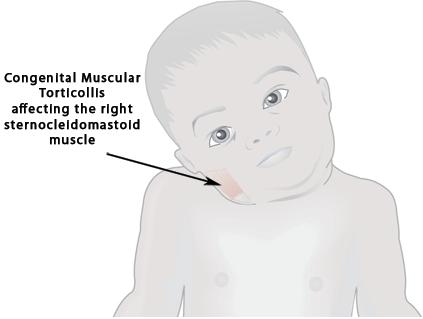
Torticollis (specifically congenital muscular torticollis, or CMT) happens when a baby’s neck muscle — the sternocleidomastoid — is tight or shortened on one side. As a result, your baby’s head tilts toward one shoulder while turning toward the opposite side. Think of it as a “stuck” head preference.
Plagiocephaly; often called flat head syndrome — is a flattened area that develops on part of a baby’s soft skull. Because newborns’ heads are so mouldable, steady pressure on the same spot gradually flattens it.
Here’s the connection: a baby with torticollis tends to rest on the same side of their head, which then leads to plagiocephaly. Consequently, treating one usually helps the other.
Wait — Is It Torticollis, or Something Else?

Not every head tilt or flat spot means torticollis. Occasionally, similar signs point elsewhere — such as a simple positional preference (a habit without true muscle tightness), vision or eye issues, reflux, or, rarely, craniosynostosis, where skull sutures fuse too early and need prompt medical attention.
That’s precisely why a proper assessment matters. Rather than guessing, a pediatric physiotherapist checks your baby’s neck movement, strength, and head shape to pinpoint what’s actually going on.
Who’s Most at Risk?
While any baby can develop these conditions, some are more susceptible:
- Firstborns and multiples (twins or triplets), thanks to tighter space in the womb
- Babies from a breech position or a challenging delivery
- Little ones who spend lots of time on their backs — which matters, since safe-sleep guidance rightly recommends back-sleeping
- Babies who get limited tummy time while awake
- Infants who consistently favour one side during feeding or sleep
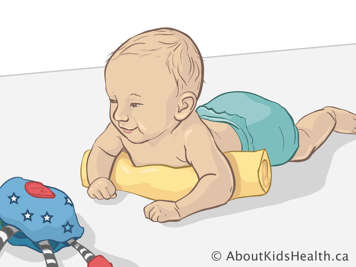
Notably, since the “Back to Sleep” safe-sleep movement, flat head syndrome has become far more common — which makes supervised, awake tummy time more important than ever. Just remember: back to sleep, tummy to play!
What Does Getting Better Look Like?
Here’s the reassuring part, parents: the outlook is excellent, especially with an early start.
Research consistently shows that physiotherapy — including gentle stretching, positioning, and parent coaching — effectively improves neck movement and head posture in babies with torticollis (2,3). Better still, beginning before 3–6 months of age tends to bring the fastest, fullest results (1).
Typical recovery looks like:
- Early, mild cases: often resolve within a few months of consistent stretches and repositioning
- Later or stubborn cases: may take longer, and some flat-head cases might warrant a helmet (orthotic) referral
The golden rule? Don’t simply “wait and see.” Early action almost always means a shorter, smoother journey.
How Can Physiotherapy Help?

At Empower Physiotherapy, we understand how stressful this feels — and we’re here to guide you and your baby every step of the way. It all starts with a thorough physiotherapy initial assessment to measure your baby’s neck movement and head shape.
From there, your personalized plan typically includes:
- Gentle, guided stretches to loosen the tight neck muscle
- Repositioning strategies for sleep, feeding, and play
- Fun tummy-time and strengthening activities
- Hands-on parent coaching, so you feel confident continuing at home
Curious about what else we offer for little ones? Explore our physiotherapy services in Edmonton. You can also read more through the APTA’s pediatric torticollis resources.
People Also Ask
1. What is the best doctor to see for torticollis or flat head syndrome? Start with your family doctor or pediatrician, who can rule out other causes and refer you to a pediatric physiotherapist — the specialist who provides the hands-on treatment. For stubborn flat-head cases, they may also involve a specialist for helmet therapy.
2. What is the fastest way to fix torticollis or a flat head? Early action is everything. The quickest, most reliable route combines physiotherapist-guided stretches, plenty of supervised tummy time, and consistent repositioning — ideally begun within the first few months of life.
3. What is commonly mistaken for torticollis? Quite a few things! A simple positional preference (no muscle tightness), vision problems, reflux, and rarely craniosynostosis can all mimic torticollis. That overlap is exactly why a professional assessment beats guessing at home.
Don’t Wait and Worry — Let’s Help Your Little One
A head tilt or flat spot might seem small, but early, gentle care makes all the difference — and gives you peace of mind, too. The best part? Most babies respond beautifully when treatment starts early.
If you’re in Edmonton, AB and have questions about your baby’s neck or head shape, contact Empower Physiotherapy today to book a gentle, thorough assessment. Together, let’s get your little one moving freely and growing confidently.
References
- Castilla, A., Gonzalez, M., Kysh, L., & Sargent, B. (2023). Informing the physical therapy management of congenital muscular torticollis clinical practice guideline: A systematic review. Pediatric Physical Therapy, 35(2), 190–200. https://doi.org/10.1097/PEP.0000000000000993
2. Desai, S., & Sharath, H. V. (2024). Effect of pediatric physical therapy interventions on congenital muscular torticollis: A systematic review. Cureus, 16(9), e69572. https://doi.org/10.7759/cureus.69572
3. Rodríguez-Huguet, M., Rodríguez-Almagro, D., Rosety-Rodríguez, M., Vinolo-Gil, M. J., Ayala-Martínez, C., & Góngora-Rodríguez, J. (2024). Effectiveness of the treatment of physiotherapy in the congenital muscular torticollis: A systematic review. Children, 11(1), 8. https://doi.org/10.3390/children11010008
4. Sargent, B., Coulter, C., Cannoy, J., & Kaplan, S. L. (2024). Physical therapy management of congenital muscular torticollis: A 2024 evidence-based clinical practice guideline from the American Physical Therapy Association Academy of Pediatric Physical Therapy. Pediatric Physical Therapy, 36(4), 370–421. https://doi.org/10.1097/PEP.0000000000001114