Most people will experience lower back pain at some point in their lives—it’s actually one of the most common reasons people visit a physiotherapist. The good news? In most cases, it’s not serious, doesn’t last forever, and responds well to the right care.
In this post, we’ll break down:
- The different types of lower back pain
- How long it typically lasts
- Why some people experience ongoing pain
- What you can do to feel better (backed by science!)
First Things First: Lower Back Pain Is Common and Often Normal
It might feel scary when your back hurts—especially if it suddenly starts or gets in the way of work, sleep, or daily tasks. But the truth is, back pain is a normal part of life for many people, much like headaches or muscle soreness after a workout.
In fact, up to 80% of adults will deal with lower back pain at some point (Balagué et al., 2012). Most of the time, it’s not dangerous and gets better with simple strategies.
Types of Lower Back Pain
🔹 Mechanical Back Pain
(also called nonspecific pain)
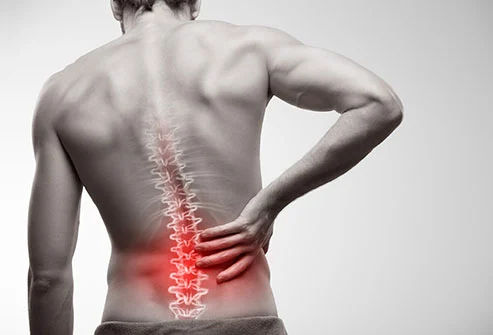
This is the most common kind. It’s often caused by muscle strain, poor posture, or too much sitting or lifting. The pain stays in the lower back and may feel achy or stiff (Maher et al., 2017).
🔹 Sciatica (Nerve-Related Pain)
If the pain shoots down your leg or feels like tingling or numbness, it may be related to a nerve being irritated—often from a bulging or herniated disc. This sounds scary, but it’s usually manageable with the right treatment (Jensen et al., 2013).
🔹 Referred Pain
Sometimes pain in your back is actually coming from somewhere else, like your hips or pelvis. A trained physio can help figure it out (Furlan et al., 2015).
How Long Does It Take to Feel Better?
- Acute (short-term) back pain: Most people feel better in a few days to a few weeks.
- Subacute pain: Lasts 6 to 12 weeks, but still shows steady improvement.
- Chronic pain: Lasts longer than 3 months, though many people still improve with the right care.
Most people recover without the need for imaging, injections, or surgery (Qaseem et al., 2017).
Why Do Some People Get Chronic Back Pain?
Even though most back pain is short-term, some people find it lingers. Chronic back pain often has multiple causes, including:
- Avoiding activity due to fear of pain (Vlaeyen & Linton, 2000)
- Stress, anxiety, or depression, which can amplify pain (Kroenke et al., 2011)
- Muscle weakness or deconditioning from lack of movement
- Poor recovery strategies or not knowing what to do next
When to See a Healthcare Professional
While most back pain gets better on its own, you should seek medical care right away if you experience:
- Numbness or weakness in your legs
- Loss of bladder or bowel control
- Unexplained weight loss or fever
- Back pain after a major trauma (Qaseem et al., 2017)
These are called “red flag” symptoms, and while they are rare, they require quick attention.
What Actually Helps? (Based on Research)
✅ Stay Active
Don’t rest too much. Movement is medicine. Walking, gentle stretching, or basic home exercises help reduce stiffness and improve function (Foster et al., 2018).
✅ See a Physiotherapist
Physios use strategies like exercise therapy, manual therapy, and education to help reduce pain and build strength (Delitto et al., 2012).
✅ Mind Your Mindset
Believing your pain will improve is powerful. Studies show that positive expectations can actually speed up recovery (Main & George, 2011).
✅ Use Pain Medication Wisely
Over-the-counter meds (like ibuprofen) can help in the short term. But long-term use of strong painkillers (like opioids) isn’t recommended (Dowell et al., 2016).
✅ Consider Stress-Relief Techniques
Cognitive-behavioral therapy (CBT), mindfulness, or breathing exercises can help if pain is linked to tension or emotional stress (Cherkin et al., 2016).
What You Can Do Right Now
- Go for a short walk or do a few gentle stretches.
- Remember: Most back pain gets better—and your body is strong and resilient.
- Book a visit with a physiotherapist to get a personalized recovery plan.
Final Thoughts
Back pain is frustrating, but it’s not something you have to fear. With the right support and a positive mindset, you can get back to moving, working, and living the life you enjoy.
Need help with back pain in Edmonton?
We’re here for you. Book an appointment with our team today—we’ll work together to help you feel your best.
References
Balagué, F., Mannion, A. F., Pellisé, F., & Cedraschi, C. (2012). Non-specific low back pain. The Lancet, 379(9814), 482–491. https://doi.org/10.1016/S0140-6736(11)60610-7
Cherkin, D. C., Sherman, K. J., Balderson, B. H., Cook, A. J., Anderson, M. L., Hawkes, R. J., … & Turner, J. A. (2016). Effect of mindfulness-based stress reduction vs cognitive behavioral therapy or usual care on back pain and functional limitations in adults with chronic low back pain. JAMA, 315(12), 1240–1249. https://doi.org/10.1001/jama.2016.2323
Delitto, A., George, S. Z., Van Dillen, L. R., Whitman, J. M., Sowa, G., Shekelle, P., … & Godges, J. J. (2012). Low back pain. Journal of Orthopaedic & Sports Physical Therapy, 42(4), A1–A57. https://doi.org/10.2519/jospt.2012.0301
Dowell, D., Haegerich, T. M., & Chou, R. (2016). CDC guideline for prescribing opioids for chronic pain—United States, 2016. JAMA, 315(15), 1624–1645. https://doi.org/10.1001/jama.2016.1464
Foster, N. E., Anema, J. R., Cherkin, D., Chou, R., Cohen, S. P., Gross, D. P., … & Maher, C. G. (2018). Prevention and treatment of low back pain: Evidence, challenges, and promising directions. The Lancet, 391(10137), 2368–2383. https://doi.org/10.1016/S0140-6736(18)30489-6
Furlan, A. D., Yazdi, F., Tsertsvadze, A., Gross, A., Van Tulder, M., Santaguida, P. L., … & Tricco, A. C. (2015). A systematic review and meta-analysis of efficacy, cost-effectiveness, and safety of selected complementary and alternative medicine for neck and low-back pain. Evidence-Based Complementary and Alternative Medicine, 2012, 1–16. https://doi.org/10.1155/2012/953139
Jensen, R. K., Kongsted, A., Kjaer, P., & Koes, B. (2013). Diagnosis and treatment of sciatica. BMJ, 347, f6360. https://doi.org/10.1136/bmj.f6360
Kroenke, K., Wu, J., Bair, M. J., Krebs, E. E., Damush, T. M., Tu, W., … & Yu, Z. (2011). Reciprocal relationship between pain and depression: A 12-month longitudinal analysis in primary care. The Journal of Pain, 12(9), 964–973. https://doi.org/10.1016/j.jpain.2011.03.003
Maher, C., Underwood, M., & Buchbinder, R. (2017). Non-specific low back pain. The Lancet, 389(10070), 736–747. https://doi.org/10.1016/S0140-6736(16)30970-9
Main, C. J., & George, S. Z. (2011). Psychosocial influences on low back pain: Why should you care? Physical Therapy, 91(5), 609–613. https://doi.org/10.2522/ptj.20100373
Qaseem, A., Wilt, T. J., McLean, R. M., & Forciea, M. A. (2017). Noninvasive treatments for acute, subacute, and chronic low back pain: A clinical practice guideline from the American College of Physicians. Annals of Internal Medicine, 166(7), 514–530. https://doi.org/10.7326/M16-2367
Vlaeyen, J. W., & Linton, S. J. (2000). Fear-avoidance and its consequences in chronic musculoskeletal pain: A state of the art. Pain, 85(3), 317–332. https://doi.org/10.1016/S0304-3959(99)00242-0